
Neutron stars can be used to detect dark matter

 In today's science, the search for the nature of dark matter ranks among the greatest challenges, but the key to fully understanding this substance may well lie within the stars. Specifically, the neutron star  

Neutron star

  Scientists have inferred the existence of dark matter, but have not observed it directly. It is extremely difficult to detect dark matter particles in experiments on Earth, because dark matter particles rarely interact with regular matter.
In order to detect these rare signals, we would need an enormous detector, perhaps so large that it would be impossible to build one on Earth. Natur offers an alternative option in the form of neutron stars - the entire neutron star can act as a dark matter detector.

Researchers have found a way to use the information gained from these unique natural dark matter detectors more accurately in research published in Physical Review Letters.

They form when giant stars explode in supernovae explosions, making them the densest stars known to exist. Left behind is a collapsed core, in which gravity presses matter together so tightly that protons and electrons combine to make neutrons. One teaspoon of material from a neutron star has a mass of one billion tons, comparable to that of the Sun.
Dark matter can be studied under extreme conditions that cannot be replicated on Earth in these "cosmic laboratories."

Ordinary matter and dark matter interact very weakly. For example, it can pass through a light-year of lead (about 10 trillion kilometers) without being stopped. It is incredible, however, how dense neutron stars can be, that they may be able to trap all dark matter particles that pass through them.

According to theory, the dark matter particles would collide with neutrons in the star, lose energy, and become gravitationally trapped. Over time, dark matter particles would accumulate in the core of the star. This is expected to heat up old, cold, neutron stars to a level that may be in reach of future observations. As dark matter accumulates, the star may collapse into a black hole in extreme cases.
It means we may be able to observe certain types of dark matter that are difficult or impossible to observe on Earth using neutron stars.
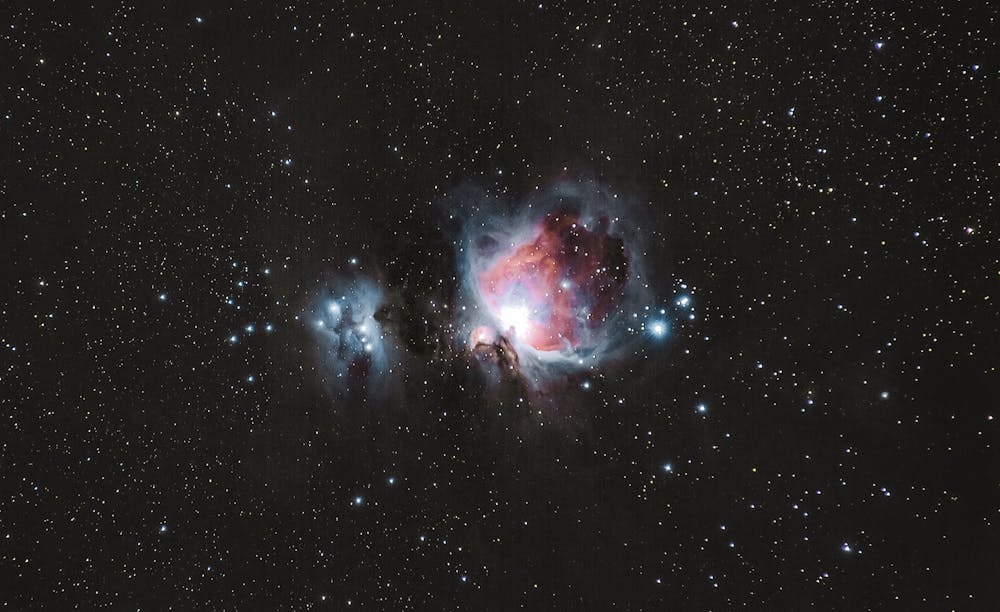
Neutron star


On Earth, dark matter experiments look for tiny nuclear-recoil signals, caused by incredibly rare collisions of slow-moving dark matter particles. As a result of the strong gravitational field of a neutron star, dark matter is accelerated to quasi-relativistic speeds, resulting in collisions of greater energy.

The nuclear-recoil method of detection is also problematic because it is most sensitive to dark matter particles with a similar mass to atomic nuclei, making it difficult to detect dark matter that might be lighter or heavier.

Comments

Popular posts from this blog

How do Ants sense Food?

  S ugar has a slight odor, particularly granulated beet sugar. While all species of ants can differentiate between a wide variety of odors, the smelling range differs from a few centimeters to meters. Desert ants can smell sugar from up to 3 meters. the food sources that ants cannot smell from a distance they 'smell' it (contact chemoreception) by touching it. So in a way, all the food they detect, they detect it by smelling. So yes, ants smell (although contact chemoreception is more like taste) the sugar. The ant colonies send scout ants to search for food in various directions, often up to a range of 100 to 200 meters.(Depends on the territorial boundary and time of the year). The scout marches steadily in less circuitous paths initially if it has memories of previous feeder locations. (Ants use visual landmarks, and a stereo-smell system to create an odor map and navigate) Periodically it will halt and look for olfactory cues. It will then take into a more circuitous rando...

What is the smallest possible Distance in The Universe?

In physics, the Planck length, denoted ℓP, is a unit of length that is the distance light travels in one unit of Planck time. It is also the reduced Compton wavelength of a particle with Planck mass. It is equal to 5.72938×10⁻³⁵ m (Lorentz–Heaviside version) or 1.61623×10⁻³⁵ m (Gaussian version). It is a base unit in the system of Planck units, developed by physicist Max Planck. The Planck length can be defined from three fundamental physical constants: the speed of light in a vacuum, the Planck constant, and the gravitational constant. It is the smallest distance about which current, experimentally corroborated, models of physics can make meaningful statements. At such small distances, the conventional laws of macro-physics no longer apply, and even relativistic physics requires special treatment. The smallest possible size for anything in the universe is the Planck Length, which is 1.6 x10 -35 m across. It is impossible to determine the difference between two locations less than one ...

What is The International Space Station?

  The International Space Station is a large spacecraft. It orbits around Earth. It is a home where astronauts live. The space station is also a science lab. Many countries worked together to build it. They also work together to use it. The space station is made of many pieces. The pieces were put together in space by astronauts.  The ISS consists of pressurized modules, external trusses, solar arrays and other components. ISS components have been launched by Russian Proton and Soyuzrockets as well as American Space Shuttles. The space station's orbit is about 220 miles above Earth. NASA and other space agencies uses the station to learn about living and working in space. The first piece of the International Space Station was launched in 1998. A Russian rocket launched that piece. After that, more pieces were added. Two years later, the station was ready for people. The first crew arrived in October 2000. People have lived on the space station ever since. Over time more pieces...